Intraoral Scanning
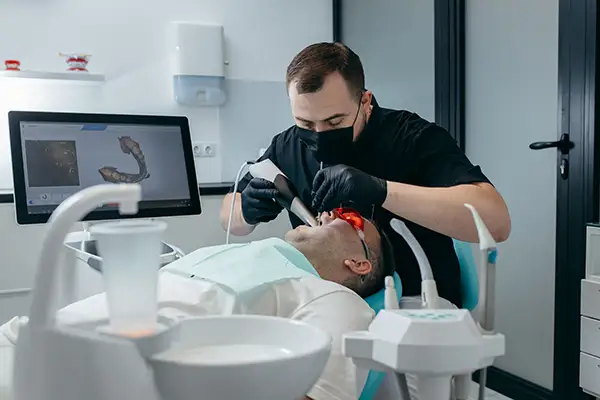 Intraoral scanning in Manchester, CT gives Columbia Implant Center a fast, digital way to capture the shape of your teeth, gums, bite, and areas where crowns, bridges, dentures, or implant-supported teeth are being planned. In many cases, this can replace traditional impression trays. The scanner creates a detailed digital model that can support restorative planning and communication with the in-house lab. Intraoral scanning in Manchester, CT gives Columbia Implant Center a fast, digital way to capture the shape of your teeth, gums, bite, and areas where crowns, bridges, dentures, or implant-supported teeth are being planned. In many cases, this can replace traditional impression trays. The scanner creates a detailed digital model that can support restorative planning and communication with the in-house lab.
For patients who dislike impression trays, the biggest difference is often comfort. Instead of biting into a tray of impression material and waiting for it to set, the dental team moves a small scanner inside the mouth while the image builds on a screen. The scan can help plan crowns, bridges, dentures, implant restorations, and the restorative side of dental implant treatment.
Intraoral scanning also fits the way Columbia Implant Center works. Our Manchester center has an in-house digital lab with milling machines, intraoral scanners, and 3D printers, so the same digital record can support restorative planning, lab design, and same-day dentistry in appropriate cases.
On This Page
What Is Intraoral Scanning?
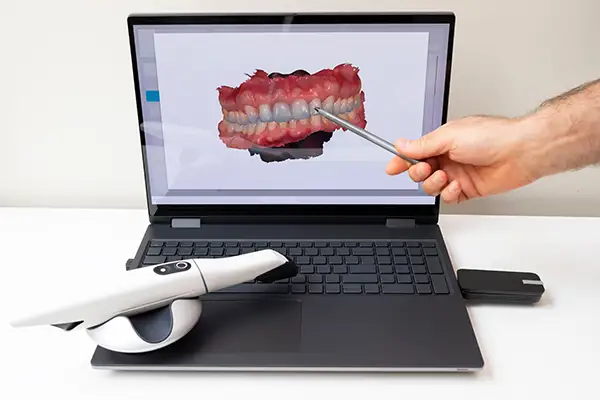 Intraoral scanning is a digital impression method. A handheld scanner captures the surfaces of your teeth and soft tissues, then converts those images into a digital model that the dental team can review, store, and use when planning restorations or tracking changes. Intraoral scanning is a digital impression method. A handheld scanner captures the surfaces of your teeth and soft tissues, then converts those images into a digital model that the dental team can review, store, and use when planning restorations or tracking changes.
The scan does not use radiation and does not involve needles, drilling, or surgery. It is a record-taking tool, not a treatment by itself. At our Manchester center, scans can help the team evaluate bite relationships, tooth shape, spacing, restoration needs, and how a planned prosthetic may fit.
What the Digital Scan Can Be Used For
The scan can support many parts of restorative and implant-related care. It may help with crowns, bridges, custom dentures, implant-supported teeth, nightguards, retainers, or restorative planning through our prosthodontics care.
For implant patients, the scan can help the team connect the visible tooth and bite information with the restorative side of the treatment plan. That matters when a patient needs a crown on one implant, a bridge over several implants, or a full arch restoration that must fit the bite correctly.
How It Differs From Traditional Impressions
Traditional impressions use a tray filled with soft material that hardens in the mouth. Intraoral scanning uses a camera-like wand instead, which can be easier for patients who gag, feel anxious with trays, or have trouble keeping their mouth open for long periods.
The digital model also goes directly into the restorative workflow. At Columbia Implant Center, that matters because the in-house lab built in 2020 can use digital records while designing custom prosthetics, crowns, bridges, and dentures.
Your Digital Dentistry Team in Manchester
 Dr. Abbas Mohammadi, DDS, is the clinical director of Columbia Dental P.C. He has 27 years of experience, has served as president and CEO of Columbia Dental since 2000, and oversees clinical operations as well as the implementation of technology and methods. His clinical director bio lists his DDS degrees from Columbia University and Aristotle University of Thessaloniki, along with his postdoctoral fellowship in periodontology, oral microbiology, and molecular biology. Dr. Abbas Mohammadi, DDS, is the clinical director of Columbia Dental P.C. He has 27 years of experience, has served as president and CEO of Columbia Dental since 2000, and oversees clinical operations as well as the implementation of technology and methods. His clinical director bio lists his DDS degrees from Columbia University and Aristotle University of Thessaloniki, along with his postdoctoral fellowship in periodontology, oral microbiology, and molecular biology.
That technology oversight matters for intraoral scanning because the file is only useful when the office has a clear workflow for using it. At Columbia Implant Center, digital impressions connect to a Manchester care model that includes same-day dentistry, an in-house lab, and multiple dental specialties under one roof.
The practice is not a one-provider office. Depending on the treatment plan, a digital scan may support care from general dentistry, prosthodontics, periodontics, oral and maxillofacial surgery, or other in-house services. When more than one provider is involved, a shared digital record helps the team work from the same information.
How the Intraoral Scanning Process Works
The scan usually happens during a consultation, exam, or restorative-planning visit at our Manchester center. It is often one of the first digital records taken because it shows tooth shape, soft tissue contours, and bite details in a way X-rays do not.
Digital Records and Restorative Goals
The visit starts with the reason for the scan. You may need a crown, bridge, denture, implant restoration, bite evaluation, or follow-up on a larger treatment plan. At Columbia Implant Center, the scan can become part of the same digital record used by the Manchester clinical team and in-house lab.
The Scan Itself
A team member moves the scanner along your teeth and gums while the digital model appears on a monitor. You usually do not need numbing for this step because the scanner records surface detail without changing the teeth. If the file will support lab work, the team can check the scan before it moves into the in-house workflow.
Reviewing the Digital Model
Once the scan is complete, the Manchester team can review the model on screen with you. This helps you see what the dental team is seeing, whether the issue is a worn tooth, a missing tooth space, a bite concern, or the shape needed for a future restoration.
Lab Planning When a Restoration Is Needed
If your treatment involves a crown, bridge, denture, or implant restoration, the digital file can support the in-house lab workflow. The lab uses milling machines, intraoral scanners, and 3D printers, which helps keep the design conversation inside the same Manchester center.
Follow-Up Scans When the Plan Changes
Some patients need more than one scan during staged care. At Columbia Implant Center, a follow-up scan may help the team compare changes, update a restoration design, or adjust the plan after healing from tooth extractions for implants or another preparatory step.
Benefits of Intraoral Scanning
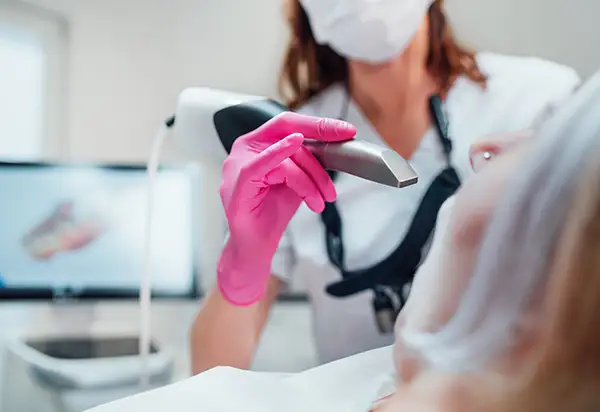 Intraoral scanning is not just a comfort upgrade. At Columbia Implant Center, the scan becomes part of a digital workflow that can help the Manchester team plan restorations, communicate with the in-house lab, and keep complex treatment organized. Intraoral scanning is not just a comfort upgrade. At Columbia Implant Center, the scan becomes part of a digital workflow that can help the Manchester team plan restorations, communicate with the in-house lab, and keep complex treatment organized.
No Tray Full of Impression Material
Patients who dislike traditional impressions often feel better with a scanner. At our Manchester center, this is especially helpful when the scan is part of a larger plan that may involve several providers, because the digital model can stay with the shared treatment record.
Better Communication With the In-House Lab
The scan gives the lab a digital model to work from when designing crowns, bridges, dentures, or implant-supported teeth. Because Columbia Implant Center has its lab in the same Manchester care model, the clinical team and lab team can discuss fit, bite, and design without starting from a physical impression alone.
Useful for Same-Day Dentistry in Appropriate Cases
Same-day dentistry depends on having accurate records early in the visit. Intraoral scans can support same-day dentistry when a restoration can be designed and made in a shorter timeframe, although the team will tell you if your case needs a longer plan.
Helps the Team Plan Around Implant Restorations and Bite
Implant restorations have to fit the bite, not just fill a gap. At Columbia Implant Center, the scan helps the Manchester team study tooth shape and bite relationships while planning implant crowns, bridges, or full arch restorations.
Easy to Update Over Time
Because digital scans can be repeated, they are useful for long-term care at our Manchester center. If a denture, bridge, or implant restoration needs review later, an updated scan can help the team compare the current mouth to the previous record.
Why Choose Our Manchester Center for Digital Scanning
Intraoral scanning works best when the office has a reason to use the digital file after the scan is taken. Columbia Implant Center uses intraoral scanners as part of a Manchester treatment model that includes dental implants, prosthodontics, same-day dentistry, and an in-house digital lab.
The lab is a practical difference. Built in 2020, it includes milling machines, intraoral scanners, and 3D printers. When a scan supports a crown, bridge, denture, or implant restoration, the file can stay connected to the team designing the final result.
The multispecialty structure also matters. A patient who needs bone grafting for dental implants, periodontal input, a prosthetic plan, or oral surgery guidance can often keep those conversations within the same Manchester center when the case calls for it.
Access is part of the workflow, too. Columbia Implant Center is available seven days a week, 365 days a year, and across 22 languages. If a restoration breaks, a temporary tooth feels off, or a staged implant plan needs another digital record, the office schedule is built for more than Monday-through-Friday dentistry.
Intraoral Scanning Cost and Financing
Cost matters, and intraoral scanning is usually tied to the type of visit or dental work being planned. The cost may depend on whether the scan is part of an exam, implant consultation, crown or bridge treatment, denture planning, or a larger same-day dentistry workflow.
Insurance coverage varies by plan and by the reason the scan is taken. Our insurance and financing options can help you understand payment resources before treatment begins, and the team can explain any expected out-of-pocket cost before moving forward.
If a scan is part of a larger plan, the final treatment cost depends on the service involved, the number of teeth, the type of restoration, and whether lab work is needed. Call (860) 743-1898 for a personalized estimate based on your visit and treatment needs.
Schedule an Intraoral Scanning Visit
Call Columbia Implant Center at (860) 743-1898 or use our request an appointment online option to schedule. We are at 483 Middle Turnpike W in Manchester, CT 06040. You can also find office details on our Contact page before booking.
Frequently Asked Questions
What is intraoral scanning used for?
Intraoral scanning creates a digital model of your teeth, gums, bite, or restoration area. At Columbia Implant Center in Manchester, CT, scans can support crowns, bridges, dentures, implant restorations, and the restorative planning side of dental implant treatment.
Is intraoral scanning uncomfortable?
It is usually easier than sitting with a full impression tray in your mouth. The Columbia Implant Center team can pause during the scan if you need a break, and the file can still become part of the Manchester center’s shared digital record.
Does intraoral scanning use radiation?
No. Intraoral scanning uses optical imaging to capture surface detail inside the mouth. If bone position or tooth roots need to be evaluated, the team may use X-rays or 3D imaging as separate diagnostic tools.
How does intraoral scanning help same-day dentistry?
The scan gives the team a digital model early in the visit, which can help with design and lab communication. At Columbia Implant Center, that can support same-day dentistry in appropriate cases when the restoration and clinical situation allow it.
Can intraoral scanning replace traditional dental impressions?
For many common cases, yes. Some cases still require other records, but many crowns, bridges, dentures, guards, retainers, and implant restorations can begin with a digital scan instead of tray material.
What happens to the scan after it is taken?
The scan becomes part of your digital dental record. When lab work is needed, the Manchester team can use the file with the in-house digital lab for crowns, bridges, dentures, or implant-related restorations.
How much does intraoral scanning cost?
The cost depends on why the scan is being taken and whether it is part of a larger visit or treatment plan. Payment planning may include insurance and financing options when restorative or implant treatment is involved.
Why choose your Manchester center for intraoral scanning?
Choose our Manchester center when the scan needs to connect to real restorative planning, not just a digital picture. Columbia Implant Center combines intraoral scanners, an in-house lab built in 2020, seven-day availability, and care across 22 languages in one location.
|